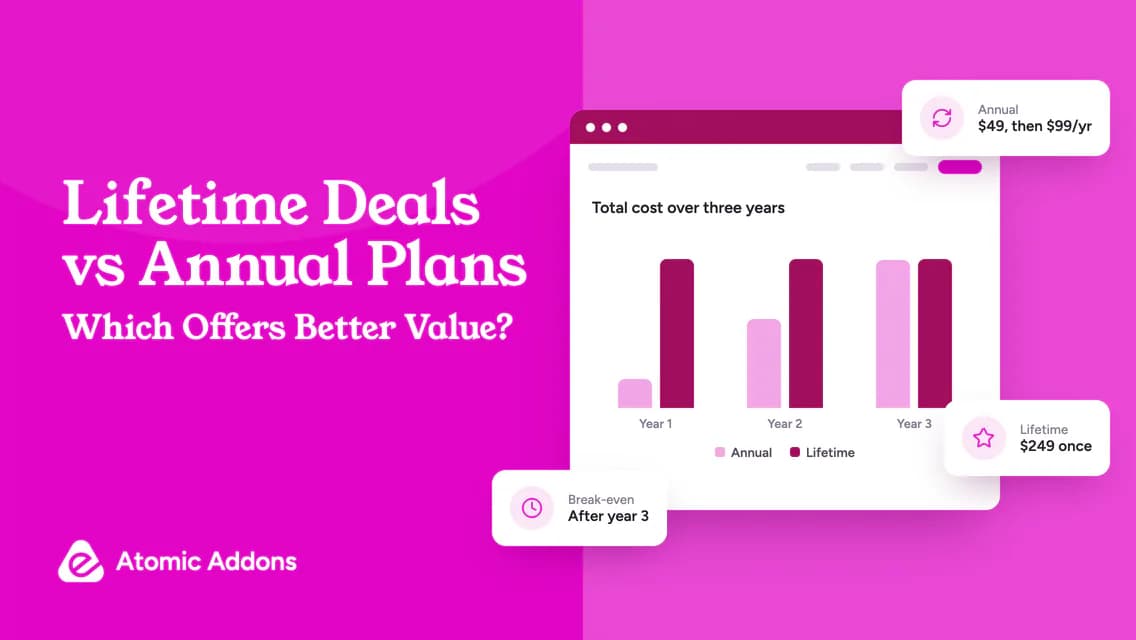
WordPress plugin lifetime deals promise a simpler way to pay, while annual plans spread the cost across ongoing renewals. For a freelancer or business owner, choosing between them is not just a question of which checkout total is smaller.
An expensive lifetime purchase can sit unused after a redesign. An annual subscription can also become costly when a critical feature stays in the website for years. Misreading the terms makes either decision harder to reverse.
The better choice depends on your expected usage period, covered sites, update entitlement and ability to absorb the initial cost. Compare both models with a realistic cost horizon, then check what “lifetime” actually means for the specific product.
What WordPress plugin lifetime deals really cover
“Lifetime” is a commercial plan label that needs a definition. Read whose lifetime is referenced and which services are included. The downloaded plugin, technical support, hosted services and future products may have different entitlements.
Do not assume a lifetime plan includes every future edition, unlimited websites or unlimited API usage. Likewise, do not assume an annual plan removes all functionality immediately upon expiry. Expiry behavior is product-specific and should be checked with the vendor.
WordPress’s license explanation provides background on its software licensing. Commercial update delivery and hosted service entitlements still require attention to the seller’s own terms; a general software license does not answer every service question.
Calculate the break-even point
Use this simplified comparison when the two plans cover equivalent features and sites:
Lifetime upfront price ÷ annual price = approximate break-even years.
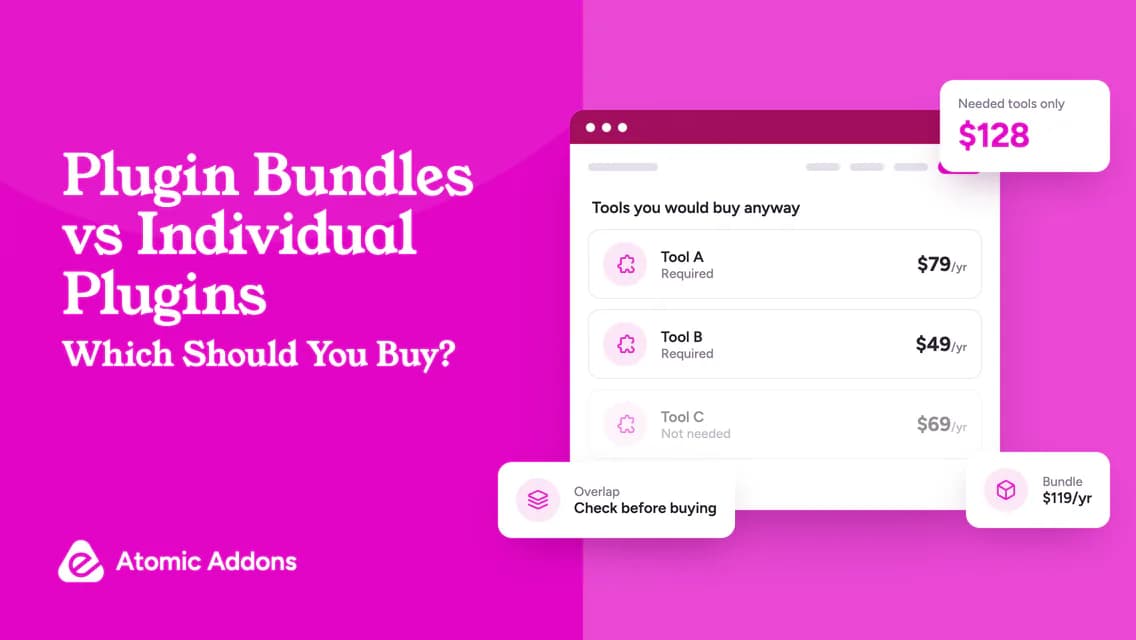
If a lifetime plan is $249 and the equivalent annual plan is $89, the simple break-even point is about 2.8 years. At unchanged prices, three annual payments total $267, compared with the $249 upfront purchase.
These are hypothetical prices. The calculation excludes tax, financing effects, usage fees and changes in plan scope. If the annual offer has a special first-year rate, calculate each payment separately instead of multiplying the introductory price.
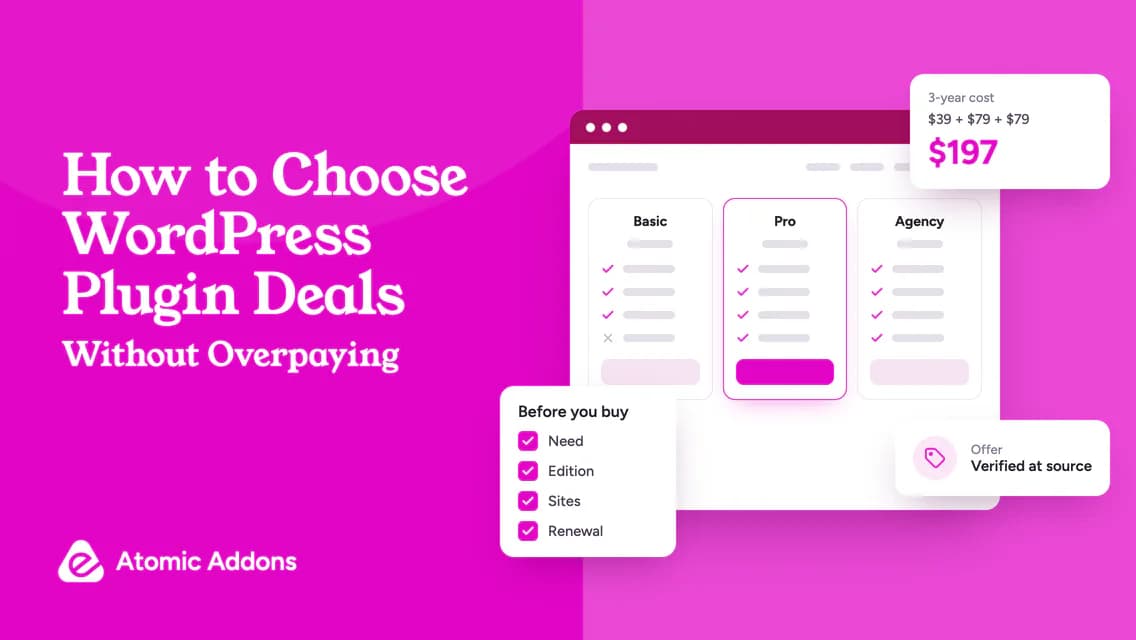
An example schedule might be:
- Annual: $49 in year one, then $99 in years two and three.
- Three-year annual total: $247.
- Lifetime: $249 once.
- Difference after three years: annual is $2 lower.
This example shows why a small headline saving should not dominate the decision. Your expected usage and the terms can matter more than a near tie.
Compare what the price calculation misses
A break-even number assumes you continue using the product. Consider a redesign, a switch away from Elementor or the closure of a temporary campaign site. A paid license is not useful merely because it remains available in an account.
Also consider cash flow. Paying more upfront can be unattractive when a small business needs money for content, operations or customer support. A slightly higher long-term cost may be acceptable if the annual model suits the project’s uncertainty.
Ask how upgrades are handled. Does the lifetime purchase include the edition you need, or would a later upgrade create another bill? Can the license allowance expand? Can it move between production websites?
Compare support and update entitlements
Evaluate support separately from downloadable code. Determine the channel, eligibility period, technical scope and any limits on the number of supported sites. “Priority” is not a measurable response promise unless the vendor defines one.
For a concrete example of entitlement management, WooCommerce’s subscription documentation describes activating marketplace subscriptions for updates and support. Other developers may manage those services differently.
Review the support history and documentation before paying. Look for understandable setup instructions and a route to ask questions. Avoid predicting future development from promises alone.
Which model fits your website?
A stable business website with an established workflow is a stronger lifetime candidate than an experimental project that may change platforms. The more certain your need, the more meaningful a long-term cost calculation becomes.
An agency should model usage against realistic client activations, not its largest imaginable future portfolio. Include the effect of clients leaving and ownership transferring. Ask whether staging sites count and how deactivation works.
A short-term campaign site may suit annual or shorter billing when offered. A long-lived store may justify a lifetime option, but only if the plan supports its operational requirements and necessary integrations.
Available WordPress plugin plans and offers can help you shortlist products. Treat each product’s official checkout and license documentation as the authority on whether a lifetime option is actually available.
Questions to send the developer
Before choosing a lifetime plan, ask:
- What does lifetime include for this exact edition?
- Are updates and support covered for the same period?
- Which hosted services or usage allowances are excluded?
- What happens if I move a site or transfer a client project?
- Are future products or major new editions separate purchases?
- Which refund conditions apply to this offer?
Keep the written answers with your receipt. If an answer conflicts with the checkout terms, resolve the discrepancy before purchasing.
For an Elementor workflow, start with the Atomic Addons feature overview to establish relevance, then inspect the qualifying plan. Do not assume a billing model based on the product category.
Frequently asked questions
Are lifetime plugin deals always cheaper?
No. They can cost less over a long usage period, but only when you keep using the covered product. A site redesign, missing feature or excluded service can change the comparison. Calculate the likely ownership period rather than treating the lowest eventual break-even point as a guarantee.
Does lifetime mean unlimited sites?
No. Duration and site allowance are separate terms. A lifetime license may cover a single website or a defined number of activations. Check staging, multisite and client-use rules too. Buy the allowance you can reasonably use rather than assuming the plan label removes activation limits.
What happens when an annual plugin license expires?
The outcome depends on the developer. Update access, support, editing capabilities and external services may change in different ways. Read the specific expiry documentation and avoid general promises that an installed plugin will either stop completely or continue indefinitely with no limitations.
Should a new agency buy lifetime licenses?
Not automatically. A new agency may not yet know its preferred tools or realistic client volume. Test the workflow first and model a conservative number of sites. A lifetime purchase makes more sense when the product, client-use rights and long-term demand are reasonably established.
Is the break-even calculation enough?
No. It is a starting point for comparing equivalent prices. Include feature coverage, support, usage fees, cash flow and the cost of moving away later. A cheaper license can still be the wrong choice if it leaves an essential workflow unsupported or requires substantial replacement work.
How should I compare a discounted first year with a lifetime price?
Write each expected payment separately across the same ownership period. Include the introductory amount, later renewal basis and relevant usage charges, then compare equivalent site allowances and features. A simple lifetime-price-divided-by-annual-price calculation can mislead when the first annual payment is not representative of later years.
Does a lifetime license guarantee that the developer will operate forever?
No purchasing label can establish that a business will operate indefinitely. Read the contractual definition of lifetime and assess whether the product suits your risk tolerance. Keep suitable recovery and migration options for important workflows rather than interpreting a one-time payment as a guarantee of permanent availability.
Can I switch from annual billing to a lifetime plan later?
Ask the developer whether a qualifying upgrade path exists and how previous payments are treated. Availability, credits and eligibility vary, so do not assume a future conversion will preserve every entitlement. Compare the confirmed options available to your account before purchasing an annual plan as a temporary bridge.
How should I compare lifetime plans for multiple websites?
Match the realistic number of production sites and verify how staging, multisite and client use are counted. Compare the same allowance on both billing models. An unused activation allowance should not inflate the calculated value, and a lifetime term does not remove restrictions on account ownership or transfers.
Should hosted services be included in my lifetime comparison?
Yes, when the workflow depends on them. Check whether cloud processing, storage, email delivery or API usage has separate limits or charges. Include those costs in the comparison and verify their duration. A lifetime entitlement for downloadable software does not automatically answer questions about a connected external service.
Conclusion: Match the commitment to the certainty
WordPress plugin lifetime deals and annual plans create different kinds of commitment, and the cheaper-looking option is not always the safer fit.
An unsuitable lifetime purchase ties up money, while an overlooked annual renewal can create a bill you did not plan for. Both problems become more costly when the website depends on the tool.
Calculate a realistic ownership period, verify the exact entitlements and choose the model that fits the project’s stability and budget. Make the long-term decision with written terms, not the word “lifetime” alone.